
As the colors of fall sweep across the Natural State (Arkansas, for those who don’t know where I’m aiming), I find myself compelled to follow suit. If nature is changing dress, donning shades of gold and orange, shouldn’t we do the same? Shouldn’t we also embrace change?
Arkansas, renowned for its lush greenery, is now undergoing a striking transformation. There’s a unique magic in the landscape as it shifts into warm hues of amber and gold. This time of year signals not just a change in scenery, but also a moment of reflection, cleansing, and preparation for what lies ahead — paving the way for next year’s strong crops and robust cattle born from the richness of the earth.
With that, I invite you to discover a little more about orange wine, as we bid a bittersweet farewell to the happy days of summer.
Just as trees shed their leaves to conserve energy, the soil begins a regenerative process. Nutrients from decomposing leaves and organic matter return to the earth, enriching it for future growth. This quiet phase allows plants to store energy and recover, preparing for the burst of spring. Farmers often see autumn and winter as a time when the land “rests,” restoring its fertility for the seasons to come. It’s a sacred rhythm, fundamental to sustainable agriculture and natural ecosystems.
This season also invites us to explore ancient winemaking traditions — particularly, the making of orange wine. Originating from cultures that have crafted wine for millennia, orange wine is made by fermenting white grapes with their skins, seeds, and sometimes stems. This technique yields a bold and complex wine that showcases the grape in ways traditional white wines often can’t.
Two cultures deeply rooted in the history of orange winemaking are Georgia and Turkey. Georgia, often called the “cradle of wine,” has been producing wine for over 8,000 years using qvevri — large clay vessels buried underground. These vessels provided a stable temperature for fermentation and encouraged micro-oxygenation, softening tannins and adding texture. Beyond practicality, the burial connected the winemakers to the land and seasons, reinforcing a deep respect for nature’s rhythm.
Turkey, too, boasts a long winemaking history. Today, Turkish winemakers are reviving ancient methods using native grapes like Emir and Narince, and skin-contact fermentation. Regions such as Cappadocia and Thrace, with their unique microclimates, are producing vibrant, flavorful orange wines that carry centuries of history in every bottle.
Italy also deserves a spotlight — particularly the Friuli Venezia Giulia region. Grape varieties like Friulano (floral and nutty), Ribolla Gialla (citrusy with vibrant acidity), Garganega (stone fruit and herbs), and Malvasia (intensely aromatic) are all essential to the orange wine revival. Add to that the ancient Greco di Tufo, and Italy becomes a wonderland of layered, skin-contact wines.
Yet this resurgence is not limited to ancient regions. Today, winemakers across the U.S., France, Argentina, Chile, Slovenia, and Austria are embracing this ancestral craft — blending tradition with innovation.
Orange wine began appearing in the American natural wine scene in the early 2000s, mostly through imports from Italy and Slovenia. Adventurous sommeliers and winemakers were the first to embrace and experiment with this style.
The 2010s brought a surge of interest in natural, minimal-intervention wines, especially among millennials and urban wine lovers. Orange wines became a symbol of rebellion — a statement against overly polished, standardized wine.
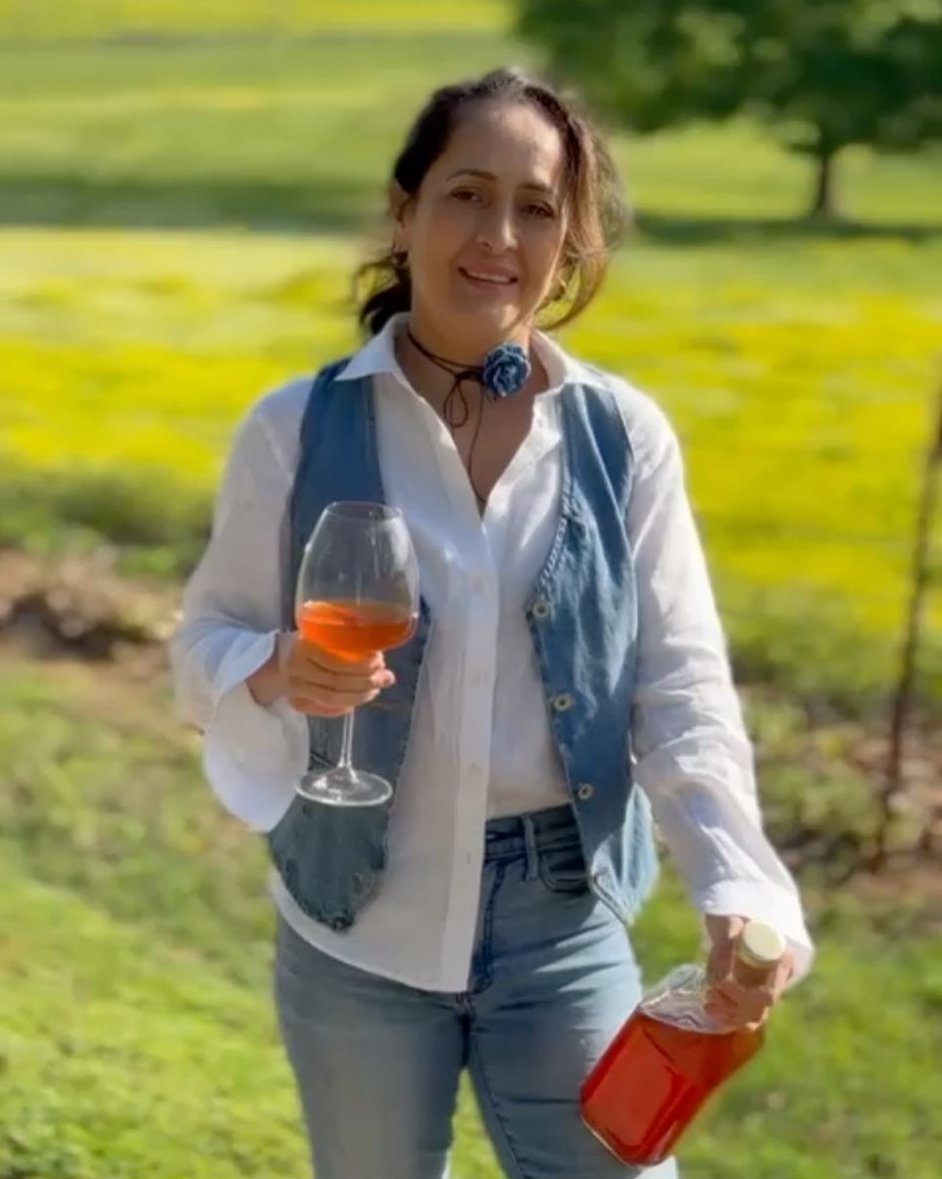
ere are some of the pioneers and standout examples from U.S. winemakers who, at some point in their journey, decided to embrace orange — simply for the joy of sharing:
🍷 Donkey & Goat Winery (Berkeley, CA)
One of the first in the U.S. to craft modern orange wine. Their 2007 “Stone Crusher” Roussanne became iconic. Expect notes of rose petal, navel orange, clove, and cinnamon — along with dried apricots, fresh nectarine, white peach, and a backbone of medium tannins and minerality (think black tea and wet cement).
🍷 Early Mountain Vineyards (Virginia)
These folks jumped into orange with full conviction. They don’t label all of their wines as orange, but their Petit Manseng-based skin-contact wine is a bold expression of American craftsmanship: rich, textured, multilayered. Think barbecued pineapple and baked cinnamon brioche.
🍷 Minimus Wines by Chad Stock (Oregon)
Stock once said his wines are “made for humans.” With respect for the land and for the people who drink them, he crafts compelling expressions like the 2023 “Colossus of Harry” Skinsy Sauvignon Blanc — dry, complex, and packed with notes of rose petal, navel orange, stone fruit, and spice.
Of course, there are others. Many others. Some are tiny operations, crafting wine on a hyper-local scale.
I recall meeting a renowned Australian winemaker who once told me:
“Before anything else, I’m a farmer. I make wine to honor the land.”
That thought came full circle when I visited a farmer in Arkansas. With little free time, he invited me to his humble cellar and shared his homemade wine — crafted from Muscadine grapes, (Arkansas’ native grape variety) made without machines, using only observation and instinct. It was fresh, bright with mandarin peel and smoky garden herbs. No fuss, no pretense — just the land, the roots, the grapes, and a bottle shared among family.
(Domaine Billy-Ray & Carmen Mainer, Branch)
That moment reminded me: natural wine, orange wine, or any wine at all is about connection.
Some pursue it as a way of life. Others, as an experiment.
Both are valid. Both are beautiful.
This bittersweet complexity makes orange wine an ideal companion for autumn meals — from roasted vegetables to hearty proteins. Some can be smoky, and orangs citrus and others, rich, dense, and kind of sweet.
As we delve into the complex world of wine, orange wines mirror the season’s dual nature — abundance and rest. They reflect a rich tapestry of flavors rooted in origin and time.
With each changing season, we can explore how ancient traditions echo in our modern world. As the earth prepares for its rest, we too can slow down, reflect, and honor what has come before. By doing so, we not only deepen our connection to nature and heritage — we help ensure, in this case that orange wine’s story continues, one glass at a time.